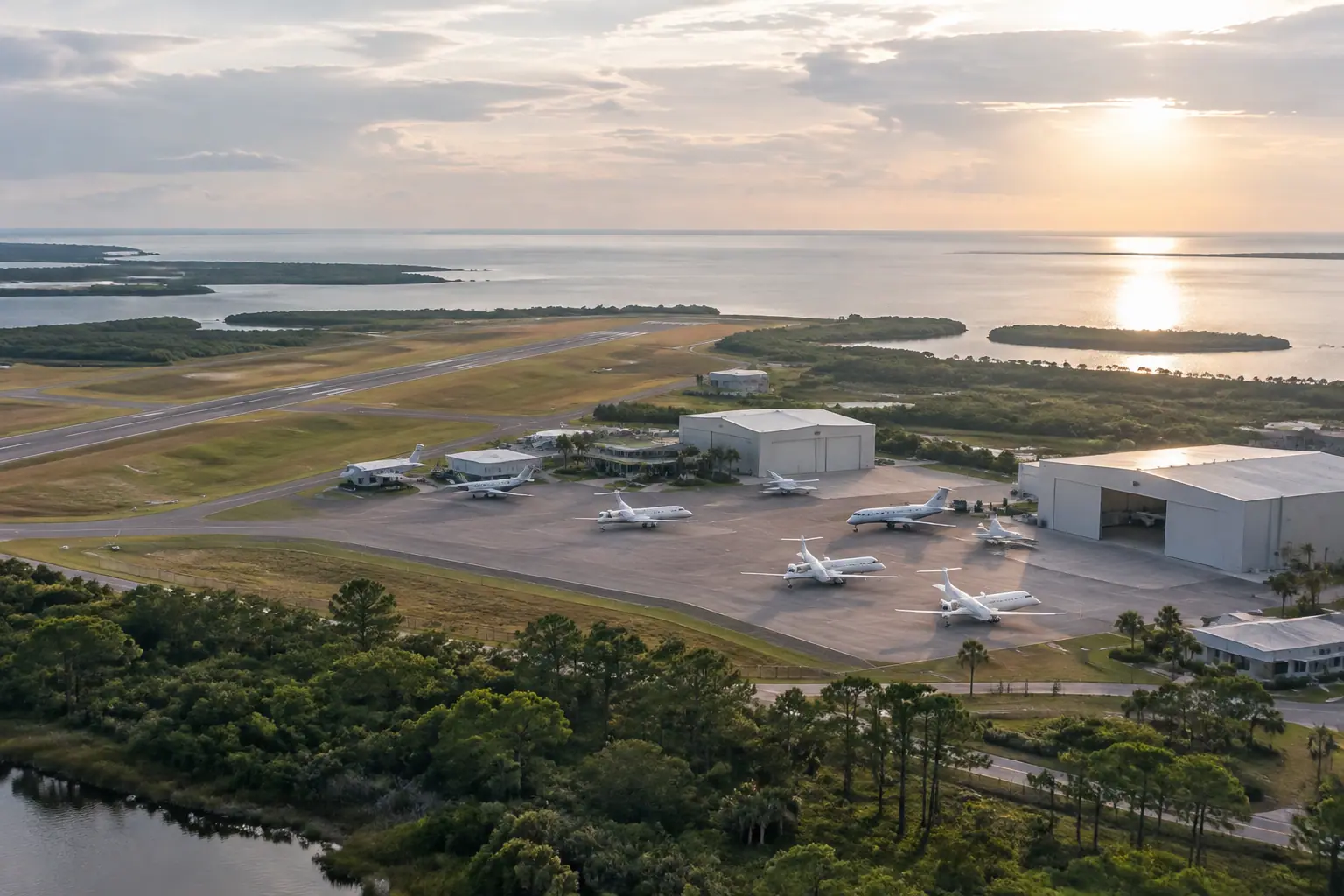
Charter jet airports Tampa
Three fields serve Tampa, and each one changes your ground day. TPA carries the longest runway at 11,002 ft and sits 26 ft above sea level. Pick charter jet airports Tampa by trip length and cabin size.
- Home
- Airports
Charter jet airports Tampa crews use fall into a simple hierarchy: one large commercial field, one Pinellas County airport across the bay, and a smaller general aviation field east of downtown. Tampa International, St. Petersburg Clearwater International and Tampa Executive all handle private charter arrivals and departures, but they are not interchangeable. Runway length, ramp space and how far your car sits from the aircraft all shift with the field you name.
The aircraft matters as much as the airport. A light jet on the Miami route takes about 0h 43m and runs roughly $4,000 to $6,000, while a midsize or super-midsize cabin on the same route gives you more room for the same short hop. Tell us the passenger count and the luggage, and the field-and-aircraft pairing narrows quickly. If you fly a turboprop rather than a jet, then Tampa Executive's 5,000 ft runway is often the easier fit.
Booking through a broker means something specific. We act as your agent under DOT Part 295, and the flying is done by FAA Part 135 operators who hold operational control, supply the crew and answer for the safety of the flight. That split matters when weather or maintenance changes the plan mid-day.
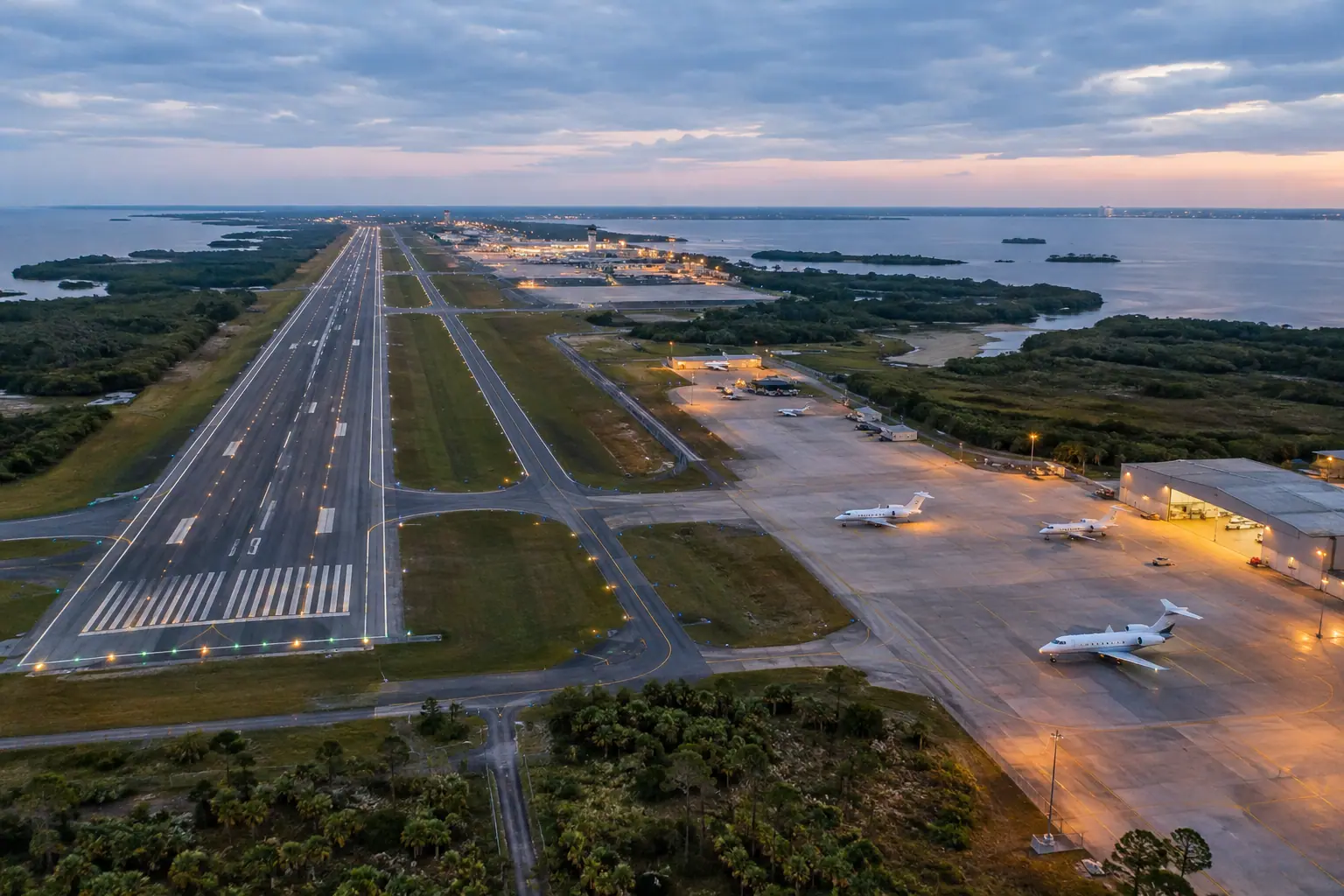
Tampa International Airport
- KTPA code
- 26 ft elevation
3 runways, longest 11,002 ft. 5 miles to Downtown Tampa. FBO: Sheltair, Signature Aviation.
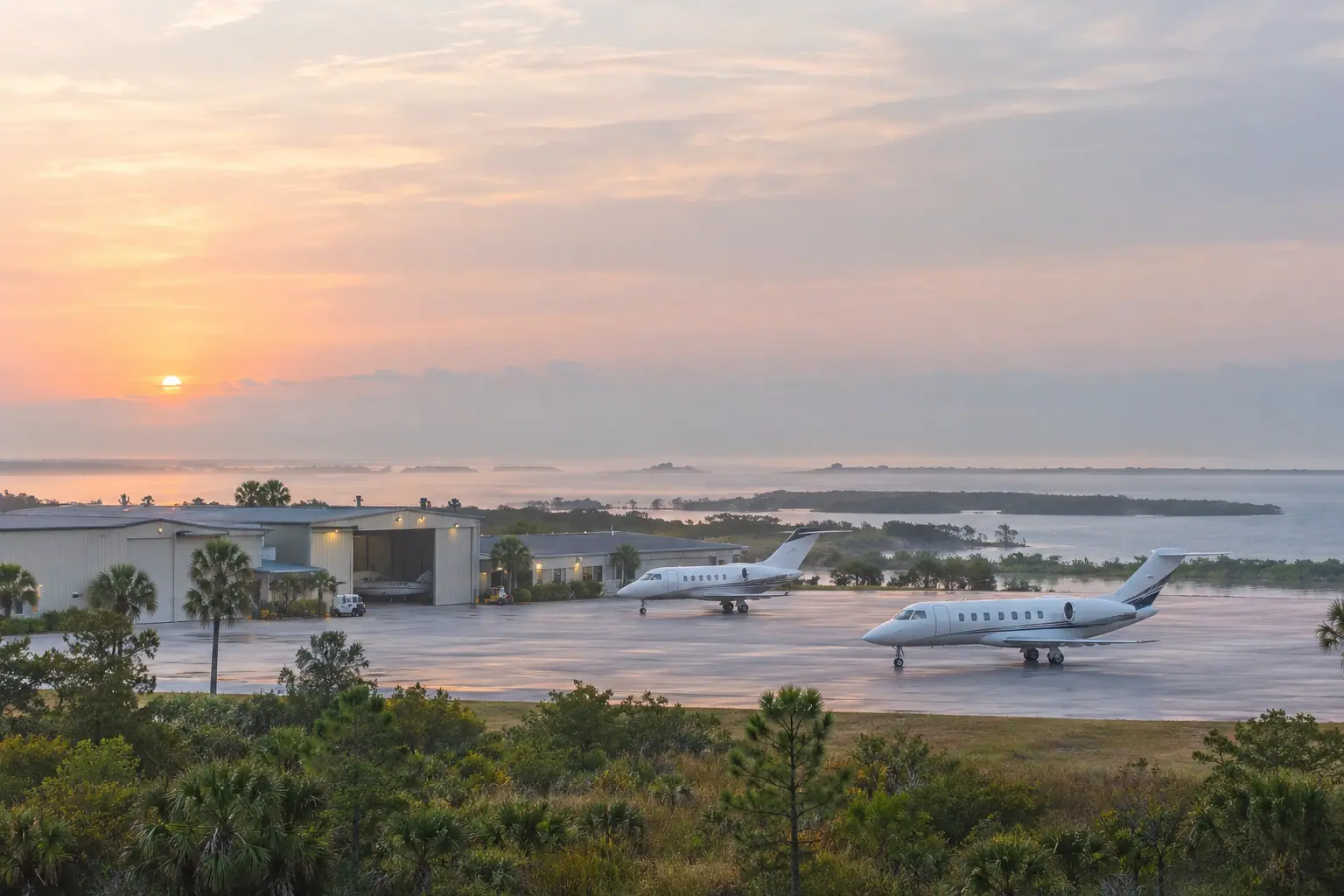
St. Petersburg Clearwater International Airport
- KPIE code
- 11 ft elevation
2 runways, longest 9,730 ft. 14 miles to Downtown Tampa.
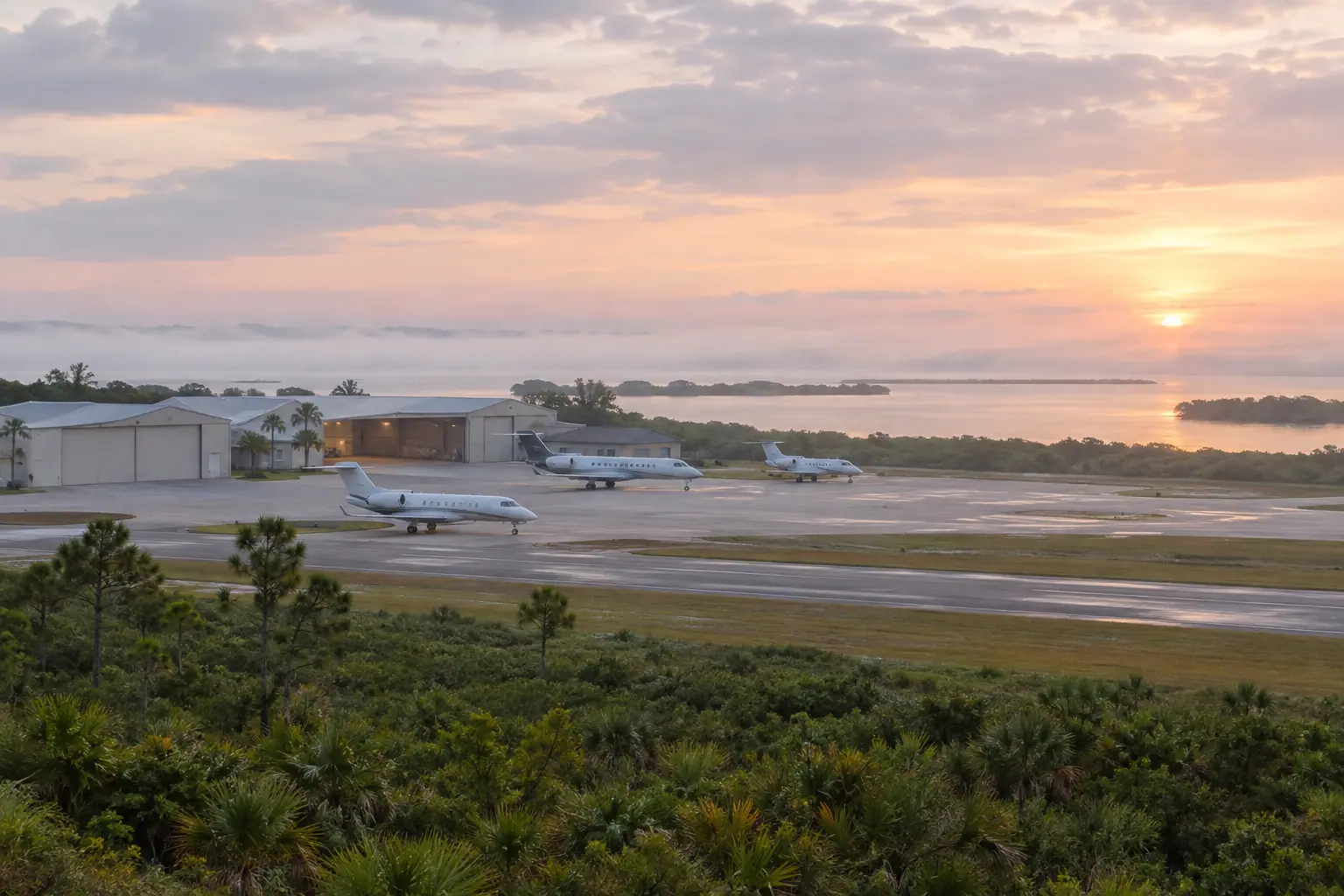
Tampa Executive Airport
- KVDF code
- 22 ft elevation
2 runways, longest 5,000 ft. 8 miles to Downtown Tampa.
Charter jet airports Tampa compared
Tampa International is the field with the most runway margin, offering 11,002 ft at 26 ft elevation, which suits heavy jets and long nonstop legs. Tampa International offers 11,002 ft of runway at 26 ft field elevation, so large-cabin aircraft load comfortably even on warm afternoons. Sheltair and Signature Aviation hold the FBO presence there, and the terminal side is minutes from Westshore and downtown. When your trip starts with a cruise departure or a downtown meeting, then TPA usually wins on drive time alone. St. Petersburg Clearwater International lists 9,730 ft of runway at 11 ft elevation and puts Clearwater, St. Pete and the beaches closer to the ramp. St. Petersburg Clearwater pairs 9,730 ft of runway with 11 ft elevation for Gulf-side departures. Tampa Executive, east of the city, offers 5,000 ft at 22 ft elevation, which fits light jets and turboprops well. Tampa Executive's 5,000 ft runway suits light jets and turboprops on Florida legs. When the schedule allows, then a smaller field usually means a shorter drive and a quieter ramp. Compare a few charter jet airports Tampa flyers actually use before you commit to a departure point. Route pricing tracks the field you choose only loosely, since hourly rates drive the estimate. A light jet to Chicago covers 868 nm in about 2h 25m, priced near $9,000 to $14,000, and the same aircraft to Atlanta covers 366 nm in about 1h 12m for roughly $4,500 to $7,000. Light jet charters from Tampa to Chicago run about 9,000 to 14,000 dollars. If your party is seven or eight with real luggage, then a midsize at $5,200 to $7,800 per hour buys the space a light jet cannot. Empty legs occasionally appear on these routes and price below a one-way charter, though they are schedule-dependent and we confirm availability rather than promise it.
| Airport | Height | Longest runway | To Downtown Tampa | July density altitude |
|---|---|---|---|---|
| Tampa International Airport | 26 ft | 11,002 ft | 5 mi | 2,000 ft |
| St. Petersburg Clearwater International Airport | 11 ft | 9,730 ft | 14 mi | 1,900 ft |
| Tampa Executive Airport | 22 ft | 5,000 ft | 8 mi | 2,000 ft |
Summer heat at Tampa airfields
July density altitude at these fields reaches about 2,000 ft, and the peak figure at 115F climbs to roughly 2,500 ft, which is why payload planning happens before departure. July density altitude near 2,000 ft at Tampa fields affects takeoff distance and payload. Warm air thins the margin a wing has to work with, so a full cabin of passengers plus checked bags plus fuel for a long leg can force a trade.
If your trip runs nonstop to the West Coast in August, then a super-midsize or heavy airframe keeps the fuel and the luggage intact. The Los Angeles route covers 1,876 nm in about 5h 38m by light jet, priced near $21,500 to $32,500, and a heat-limited light jet may need a fuel stop. Operators under FAA Part 135 rules make that call using current field data, not an old planning figure. A 9,500 to 14,500 dollar hourly heavy jet range buys the most hot-day margin.
The month-by-month picture helps you plan around it. Density altitude sits near 700 ft in January and climbs to about 2,000 ft by July, so a winter departure from Tampa Executive carries a load that the same aircraft sheds in August. When you are carrying a full cabin on a long leg, then moving up one class is usually cheaper than splitting the party across two flights.
Questions
Which charter jet airports Tampa flyers use most, and why?
Tampa International, St. Petersburg Clearwater International and Tampa Executive cover most demand. TPA brings 11,002 ft of runway and two FBOs, PIE brings 9,730 ft closer to the beaches, and VDF brings 5,000 ft for light jets and turboprops. The right pick depends on your aircraft size and where your day starts.
How much does a private jet charter from Tampa cost?
Hourly rates run about $2,200 to $3,500 for a turboprop, $3,800 to $5,800 for a light jet and $5,200 to $7,800 for a midsize. Sample trips price near $4,500 to $7,000 to Atlanta and $9,500 to $14,000 to New York by light jet. Treat every figure as an estimate until we quote your dates.
Can a heavy jet use St. Petersburg Clearwater?
PIE carries 9,730 ft of runway at 11 ft elevation, which is enough for many large-cabin aircraft on regional and transcontinental legs. On a hot July afternoon, density altitude sits near 1,900 ft, so a heavy jet bound for a long leg may still need a fuel stop or a lighter load. The operator confirms performance for your specific tail.
How does summer density altitude affect my departure?
July density altitude across the Tampa fields runs about 2,000 ft, rising to roughly 2,500 ft at 115F. That reduces lift and stretches takeoff distance, so a light jet with a full cabin may face a payload limit on a long leg. Moving up a class or accepting a fuel stop solves it.
Do I clear customs in Tampa on an international flight?
Yes, on return legs. Tampa International is the port of entry for the region, so a trip back from Nassau at 324 nm or Turks and Caicos at 671 nm clears CBP there before you step off. CBP officers handle the inspection, and your operator files the manifest. Build a little slack into the arrival plan.
Which Tampa airport is closest to downtown and the beaches?
Tampa International sits closest to downtown, Westshore and the cruise terminals. St. Petersburg Clearwater serves Clearwater, St. Pete Beach and the Pinellas beaches with far less drive time. Tampa Executive, east of the city, works well for Brandon, Plant City and business parks along the I-4 corridor. The best field is the one nearest your first stop.
How far in advance should I book a charter jet into or out of Tampa?
For a light jet or turboprop on a Florida leg, a few days is often enough, but peak season changes that. July and August each carry 25 to 26 wet days, and afternoon storms push delays, so booking a week out gives the operator room to hold a tail and a crew duty window that works for your schedule.
Who holds operational control of my flight?
The operating company does. We act as your agent under DOT Part 295 and arrange the trip with FAA Part 135 operators who hold operational control, supply the crew and carry the safety responsibility. That distinction matters if weather or maintenance changes the plan, because the operator makes those calls and we keep you informed.