Private jet charter Tampa guide
A private jet charter Tampa travelers book well in advance tends to go smoothly at TPA. The field sits 26 feet above sea level with a longest runway of 11,002 feet. This guide covers terminals, weather and how quotes come together.
- airport codes
- KTPA · TPA
- field elevation
- 26 ft
- longest runway
- 11,002 ft
- to Downtown Tampa
- 5 mi

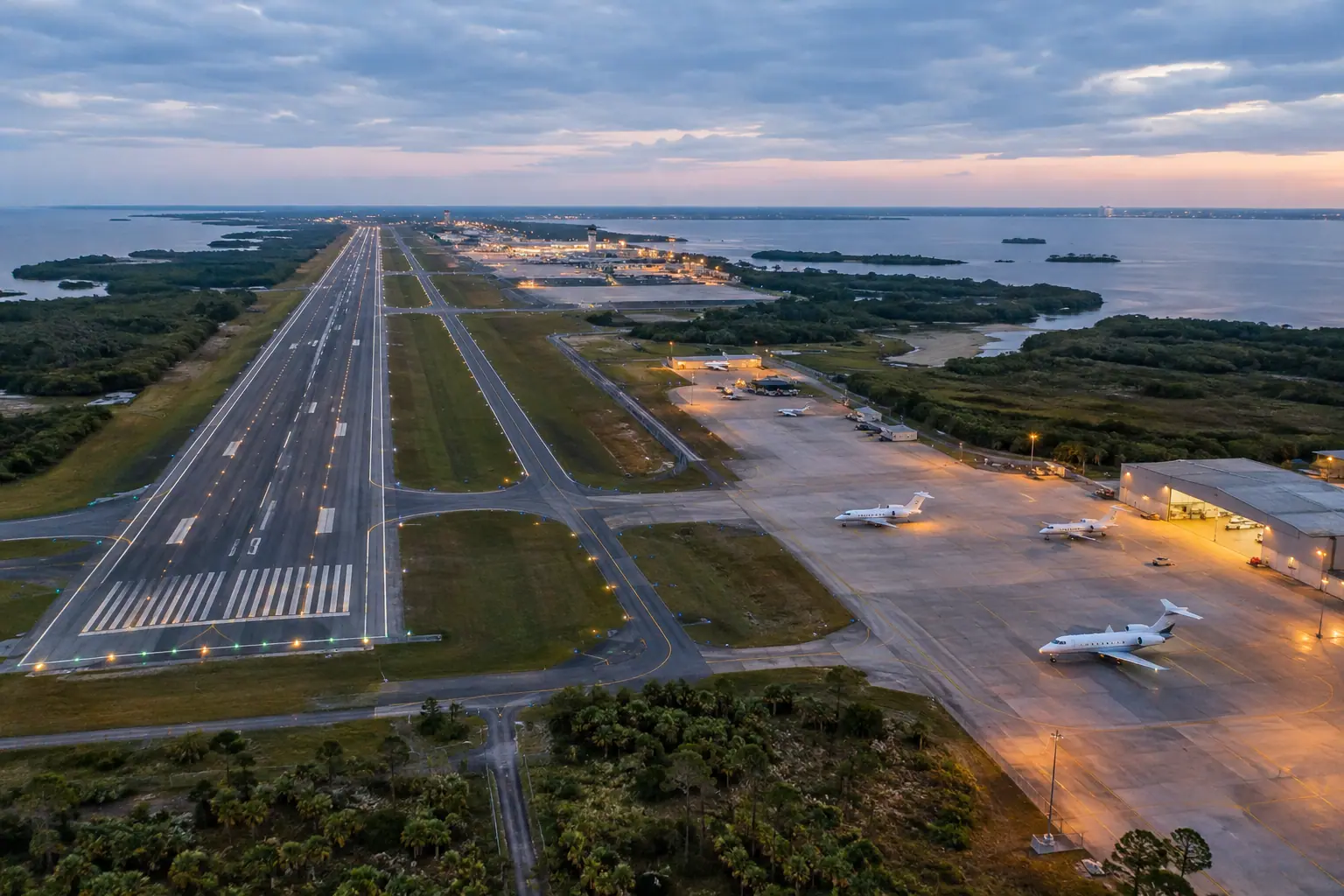
A private jet charter Tampa passengers arrange through a broker begins with the airport itself, and Tampa International is the region's main airline field. Its concrete sits at 26 feet elevation and its longest runway measures 11,002 feet, which gives most midsize and large-cabin aircraft comfortable margins even on warm afternoons. The field handles heavy airline traffic alongside general aviation, so departure slots and taxi flows matter when you are timing a pickup around a meeting in downtown Tampa or a cruise terminal sailing.
That said, TPA is not a dedicated business-aviation field, and the private side of the airport works differently from the airline concourses. Private flights at Tampa International stage through two FBOs rather than the main terminal, which means your driver meets you at a separate building and your paperwork is handled away from the crowds. Knowing this before you book saves time on the day, especially if you are arriving on a commercial leg first.
If your schedule is tight and TPA looks congested, then two reliever fields sit close by. St. Petersburg Clearwater International, known as PIE, has a 9,730-foot runway and sits 11 feet above sea level. Tampa Executive, or VDF, runs a 5,000-foot strip at 22 feet. Which one fits depends on your aircraft size, your destination and how close you want to be to the beach or the bay.
Most travelers comparing quotes want the same handful of answers: what the flight timeframe looks like, which airport side they depart from, and what the estimate excludes. A broker coordinates those pieces, while the flying itself is performed by FAA Part 135 operators who hold operational control of each flight and crew. Because brokers act as agents under DOT Part 295, you should see that structure spelled out in writing before you sign anything.
Runways and field limits at TPA
Tampa International's longest runway reaches 11,002 feet, which comfortably serves everything from light jets to large-cabin aircraft headed for the West Coast. A 26-foot elevation and 11,002 feet of runway give Tampa departures generous margins for long legs, and the field's layout has more than one paved direction for wind changes. Summer heat still matters, but the runway length absorbs most of the penalty. Pilots calculate density altitude before departure, and on a hot afternoon that figure can climb to roughly 2,500 feet at 115 degrees. The runway at TPA is long enough that this rarely forces a payload cut, but a heavier jet bound for a distant city may still see a short-field performance check on the paperwork.
| Runway | Feet | Width | Surface |
|---|---|---|---|
| 19R/01L | 11,002 ft | 150 ft | Concrete |
| 19L/01R | 8,300 ft | 150 ft | PEM |
| 10/28 | 6,999 ft | 150 ft | PEM |
FBO options on the private side
Two FBOs serve general aviation at TPA: Sheltair and Signature Aviation, and both handle private arrivals and departures away from the airline terminal. Sheltair and Signature Aviation give Tampa private jet passengers a choice of two handling bases on the field, so your operator will name one when the trip is confirmed. Ask which one your flight uses before you arrange ground transport, because the two sit apart and a driver sent to the wrong address wastes the one thing you are paying to save. Ground handling, fueling and catering are arranged by the operator through the FBO. If you are connecting from a commercial arrival at the main terminal, build in time for the transfer between buildings.
Who tends to use a Tampa charter
- Cruise passengers who need to reach the Port of Tampa on sailing day without a connection through a hub airport.
- Business travelers visiting downtown Tampa, Westshore or the Channelside district on a schedule that will not stretch to airline delays.
- Owners and guests heading to Gulf Coast beaches or to events across the bay, where a short hop beats a long drive.
- Families and small groups flying to the Northeast or Midwest who want one cabin instead of a connecting itinerary.
| Class | Typical runway need | Here |
|---|---|---|
| Turboprop | 3,300 ft+ | Fits |
| Light jet | 4,000 ft+ | Fits |
| Midsize jet | 5,000 ft+ | Fits |
| Super-midsize jet | 5,200 ft+ | Fits |
| Heavy jet | 5,600 ft+ | Fits |
Weather and density altitude by season
Tampa's summer heat pushes density altitude to roughly 2,000 feet in July, and the wet season brings 26 wet days that month. July at TPA averages 88 degrees with 26 wet days, so afternoon build-ups are a real planning factor, and August runs nearly the same at 25 wet days. Storms here tend to arrive in the mid to late afternoon, pass quickly and leave the air unstable. If your departure is scheduled for late afternoon in summer, then an earlier slot often means less waiting for a gap in the weather.
Winter flips the picture. January highs sit near 69 degrees with density altitude around 700 feet and seven wet days, the easiest flying window of the year. February and December are close behind at 1,000 feet and seven and six wet days respectively. Spring ramps up quickly, with April reaching 1,600 feet and March at 1,300. Winter months near 700 feet density altitude make Tampa one of the easier Florida fields in January, which is worth remembering if your trip is flexible.
| Month | Avg high | Rainy days | Density altitude |
|---|---|---|---|
| Jan | 69°F | 7 | 700 ft |
| Feb | 74°F | 7 | 1,000 ft |
| Mar | 78°F | 6 | 1,300 ft |
| Apr | 83°F | 9 | 1,600 ft |
| May | 87°F | 11 | 1,900 ft |
| Jun | 87°F | 22 | 1,900 ft |
| Jul | 88°F | 26 | 2,000 ft |
| Aug | 88°F | 25 | 2,000 ft |
| Sep | 86°F | 20 | 1,800 ft |
| Oct | 83°F | 9 | 1,600 ft |
| Nov | 78°F | 6 | 1,300 ft |
| Dec | 74°F | 6 | 1,000 ft |
Getting to and from the airport
Tampa International sits about six miles west of downtown, with the Veterans Expressway and I-275 both feeding the airport road network. A downtown Tampa pickup reaches the FBO in a short drive on I-275 under normal traffic, and the Westshore business district is closer still. If you are coming from St. Petersburg or the beaches, cross the bay early because the Howard Frankland and Gandy bridges back up in rush hour. For international legs, CBP clearance is arranged in advance, and your operator will tell you which building to use. Passengers on domestic flights should carry government-issued ID, as TSA rules apply at some FBOs and not others.
Private jet routes via Tampa
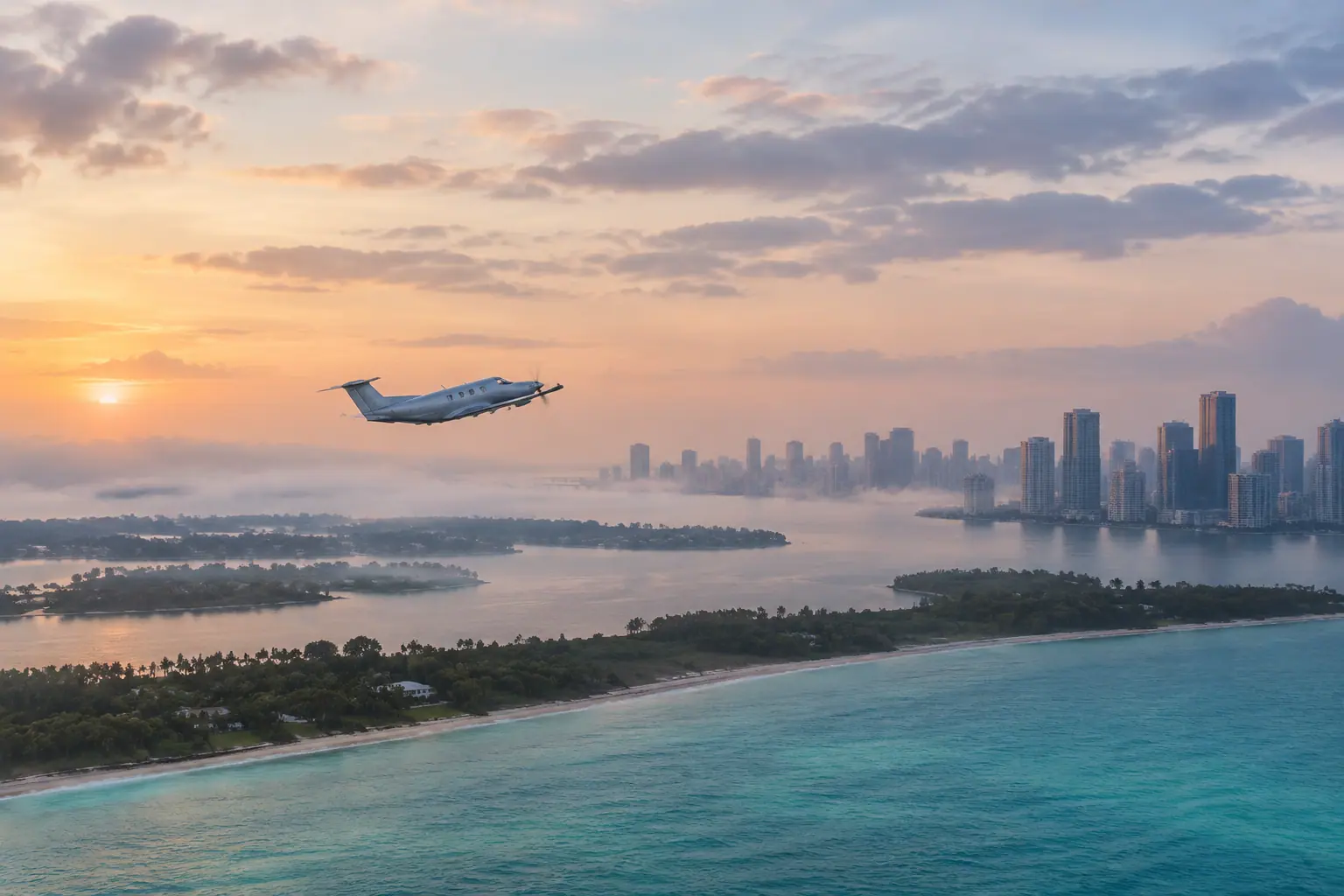
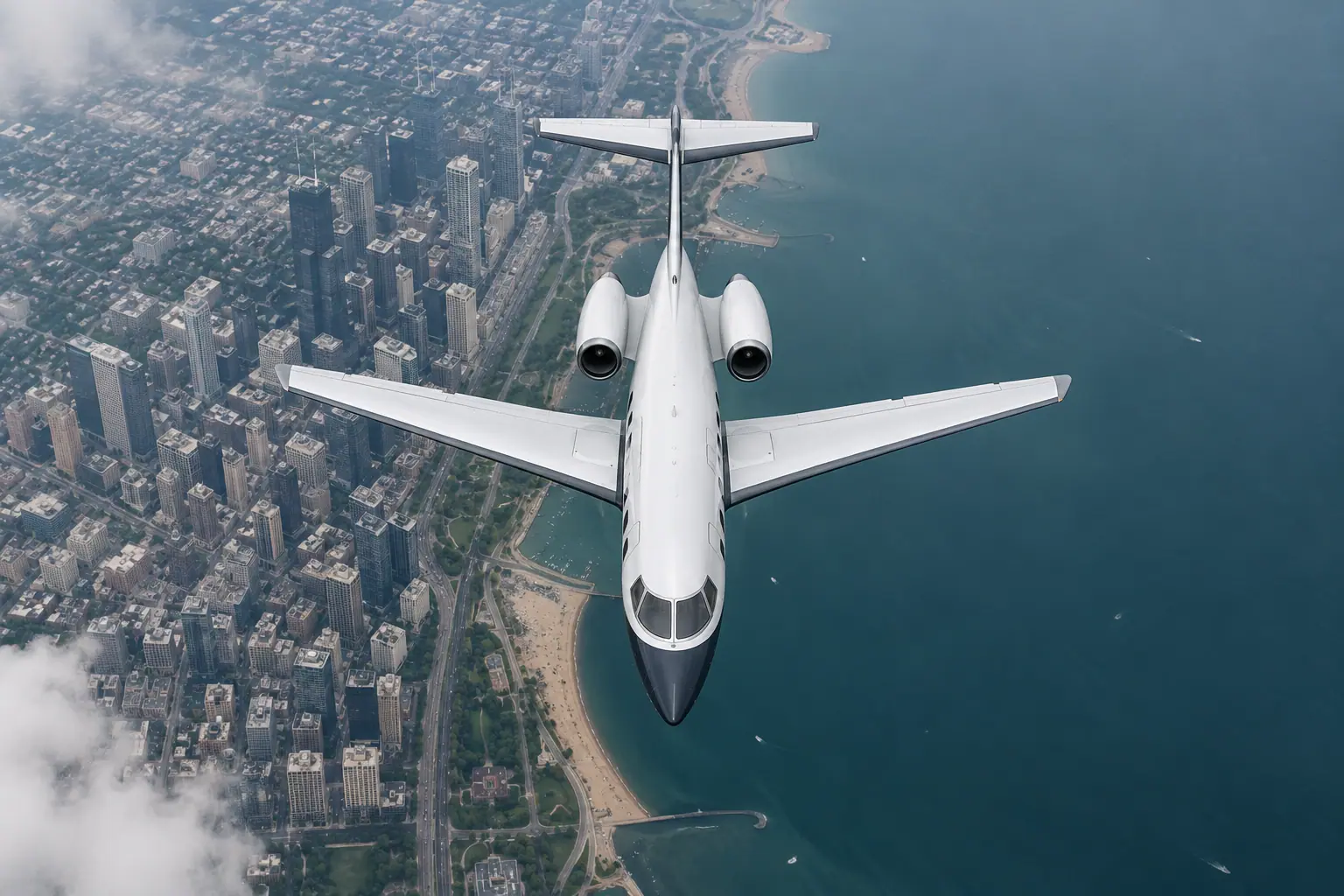
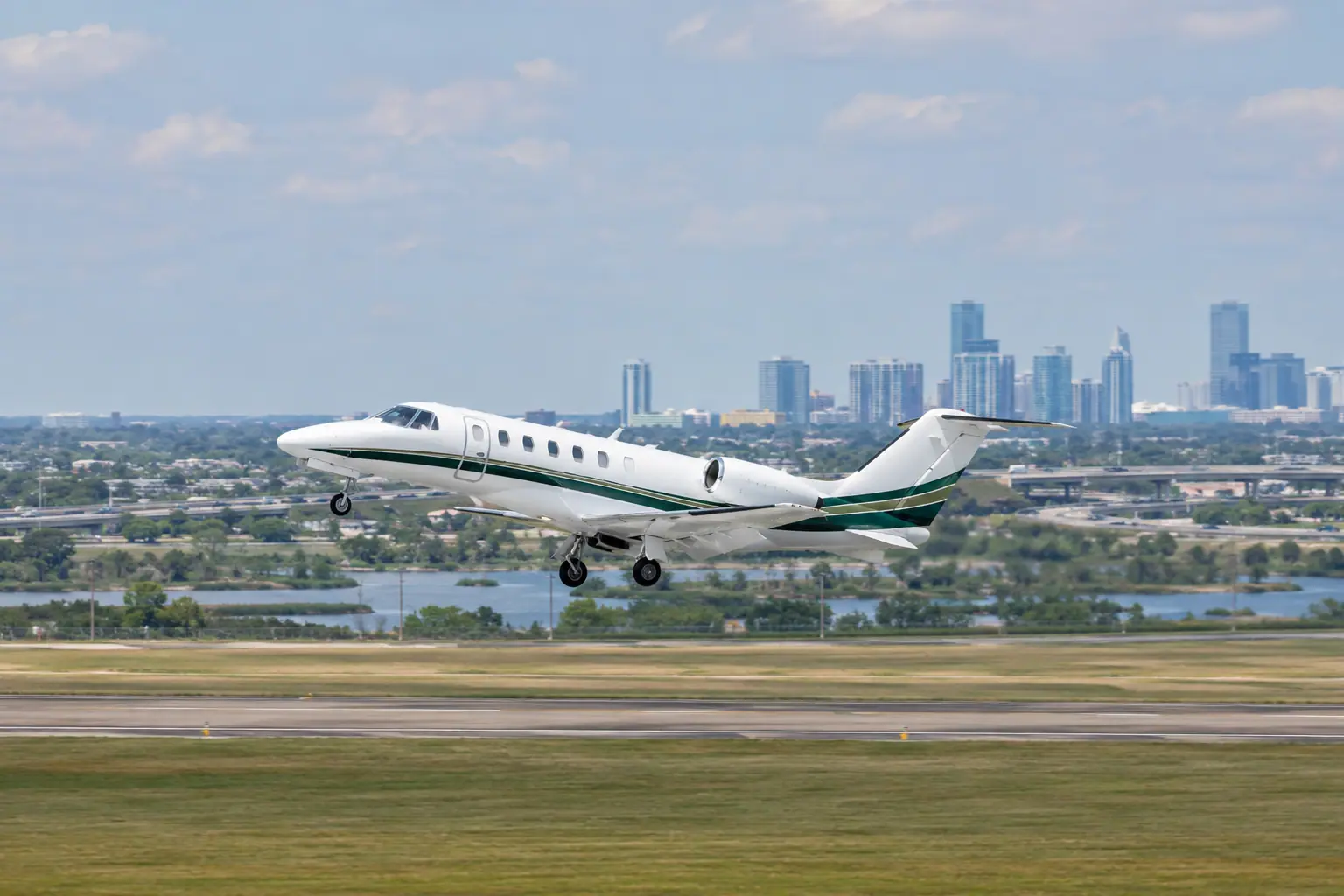
These 6 private jet routes span 173 to 1,876 nautical miles, with one-way light jet quotes ranging from $4,000 to $32,500.


Questions about this airport
How far ahead should I book a private jet charter Tampa trip?
Aim for two to three weeks on a private jet charter Tampa itinerary, and longer around holidays or major events. TPA is a busy field and aircraft availability tightens on short notice. If your dates are fixed, then booking early usually gives you more aircraft choices at a lower estimate.
Which airport do Tampa charters use?
Most use Tampa International, TPA, at 26 feet elevation with an 11,002-foot runway and two FBOs, Sheltair and Signature Aviation. Some flights go to St. Petersburg Clearwater or Tampa Executive instead, depending on aircraft size and where you are staying. Your operator names the field and the FBO when the trip is confirmed.
Does summer heat affect departures from TPA?
Yes. July density altitude at TPA runs about 2,000 feet, and on a 115-degree day it can reach roughly 2,500 feet. Heat thins the air and lengthens takeoff rolls. If you are flying a heavy jet on a long leg in midsummer, then an early morning departure often avoids any payload discussion.
What does a charter quote from Tampa include?
Quotes are estimates and typically cover aircraft, crew and fuel for the stated route. They may exclude de-icing, overnight crew costs, catering and ground transport. Ask for a written breakdown before you commit, since FAA Part 135 operators set the flight terms and the broker arranges them as your agent under DOT Part 295.
Can I fly international from Tampa on a private jet?
Yes, and CBP clearance is arranged ahead of time for international arrivals and departures. You will need passports and any visas the destination requires, and your operator will confirm which building handles customs. If your itinerary includes a stop in another country, then build extra time into the plan for clearance.
How far is Tampa from other cities by air?
Flight time depends on aircraft and winds, so treat any figure as approximate. Tampa sits well placed for the Southeast, the Northeast and the Midwest, and the runway length at TPA supports nonstop legs to the West Coast. Ask your operator for a flight and time calculator estimate for your specific route and aircraft.