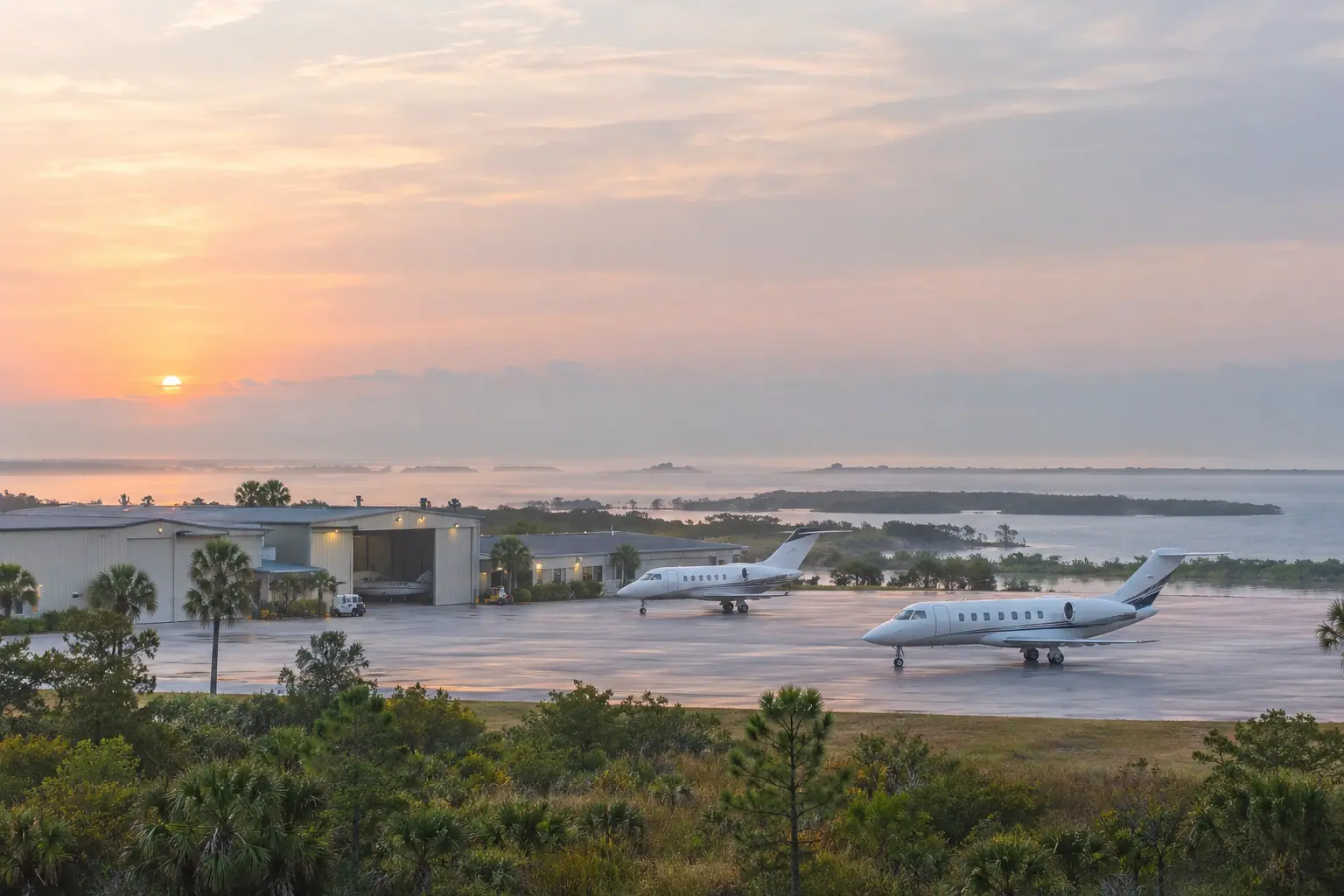
Charter jet St. Petersburg Clearwater
PIE handles charter jet St. Petersburg Clearwater trips on a 9,730-foot runway. The field sits 11 feet above sea level, minutes from Tampa Bay. We arrange the flight; certificated operators fly it.
- airport codes
- KPIE · PIE
- field elevation
- 11 ft
- longest runway
- 9,730 ft
- to Downtown Tampa
- 14 mi
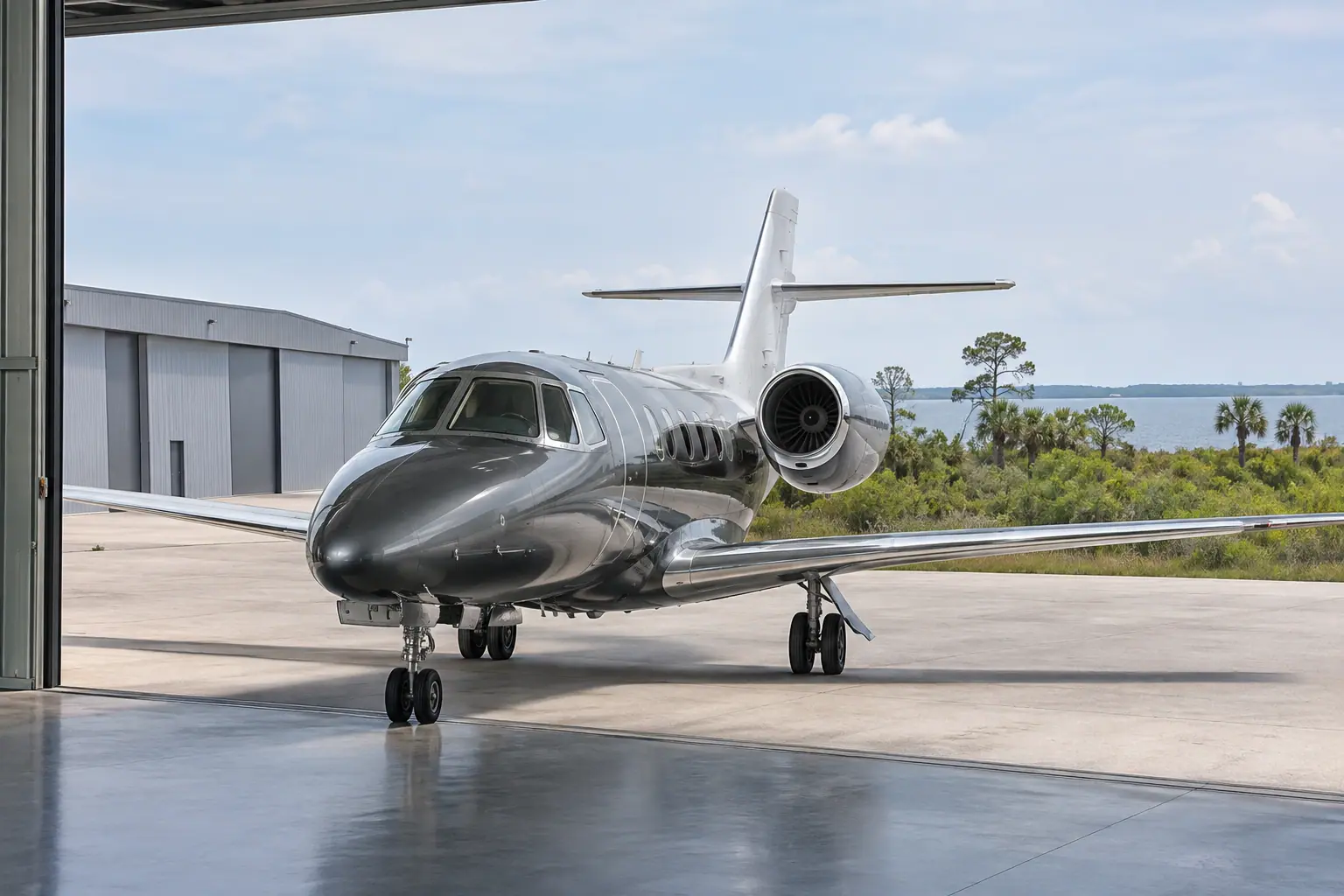
A charter jet St. Petersburg Clearwater request usually starts with the same question: which side of the bay do you actually need. St. Petersburg Clearwater International, KPIE for short, sits on the Pinellas side, close to Clearwater Beach, downtown St. Pete and the beaches, while Tampa International across the water suits downtown Tampa and the business district. The 9,730-foot main runway at KPIE supports midsize and large-cabin jets on most Florida and domestic routes, so the field works for more than light aircraft. Ask us to price both airports and you can compare the drive on each end against the difference in fare.
KPIE carries the IATA code PIE and sits at 11 feet of elevation, a flat coastal field with no terrain to climb over after takeoff. That matters less for the runway and more for what the day feels like: you land, you are on the Pinellas peninsula, and the beach is a short drive rather than a cross-bay slog. Charter flights to and from Tampa Bay often split between PIE and TPA, and the right answer depends on where your passengers sleep and where the aircraft is based. We quote both, with estimated pricing, and let you choose.
For longer legs, the number that shapes the plan is distance. From PIE to Chicago is roughly 1,975 miles, and a nonstop run of that length narrows the field to aircraft with real range and a comfortable cabin for the hours involved. A midsize jet trims the Chicago run while keeping the Clearwater arrival simple rather than adding a fuel stop. Tell us the city pair and the passenger count and we will come back with aircraft options, estimated pricing and the operators who hold the flights.
Runway length and what it means at PIE
The longest runway at St. Petersburg Clearwater International measures 9,730 feet, which is enough for large-cabin jets at typical Florida temperatures and puts the field in a different class from the 5,000-foot strip at Tampa Executive. A 9,730-foot runway at 11 feet elevation leaves room for heavier fuel loads on long domestic legs, so a westbound or northbound flight does not have to trade range for runway. Summer heat raises density altitude, and we account for it when matching aircraft to your route rather than assuming a number from a winter trip.
| Runway | Feet | Width | Surface |
|---|---|---|---|
| 18/36 | 9,730 ft | 150 ft | concrete |
| 04/22 | 6,000 ft | 150 ft | Asphalt |
Ground handling and FBO plans at KPIE
Ground handling including jet aircraft fueling at St. Petersburg Clearwater is arranged through the FBOs serving the field, and we confirm the specifics for your tail number before you book. Because we are a broker rather than an operator, the handling agent, the fuel order and the ramp details come from the company flying the leg, not from a fleet we claim to own. If you have a preferred handler or a fuel card, say so and we will pass it along.
For international arrivals, clearance is handled by CBP at the field where the operator has made the arrangement, and passengers should expect a document check before the car. Domestic legs are simpler. We tell you which entrance to use, who meets the aircraft and what the handling fees look like as a separate line, so the estimate you compare is the whole picture rather than a fare with extras folded in later.
Who KPIE suits best
- Travelers staying in St. Petersburg, Clearwater or the beaches, who avoid a cross-bay drive after landing
- Groups flying midsize or large-cabin jets that need the 9,730-foot runway for longer domestic legs
- Winter visitors arriving in January, when highs sit near 69F and density altitude drops to about 700 feet
- Passengers comparing PIE against Tampa International and Tampa Executive before choosing a departure point
| Class | Typical runway need | Here |
|---|---|---|
| Turboprop | 3,300 ft+ | Fits |
| Light jet | 4,000 ft+ | Fits |
| Midsize jet | 5,000 ft+ | Fits |
| Super-midsize jet | 5,200 ft+ | Fits |
| Heavy jet | 5,600 ft+ | Fits |
Heat, density altitude and season
July density altitude at KPIE averages about 1,900 feet, and at 115F the field can see roughly 2,500 feet, which affects takeoff performance on warm afternoons. Summer density altitude near 1,900 feet in July trims payload on smaller jets, so a light jet flying a long leg on a hot day may need a fuel stop or a lighter load. Planning around a morning departure often solves it.
The wet season runs from June through September, with 22 wet days in June and 26 in July, so afternoon storms are a real scheduling factor rather than a surprise. January is the mirror image: highs near 69F, 7 wet days and density altitude around 700 feet, which is close to ideal for performance. Booking a morning departure in the wet months at PIE keeps weather delays shorter, and the same habit helps on the return leg when storms build over the Gulf.
| Month | Avg high | Rainy days | Density altitude |
|---|---|---|---|
| Jan | 69°F | 7 | 700 ft |
| Feb | 74°F | 7 | 1,000 ft |
| Mar | 78°F | 6 | 1,300 ft |
| Apr | 83°F | 9 | 1,600 ft |
| May | 87°F | 11 | 1,900 ft |
| Jun | 87°F | 22 | 1,900 ft |
| Jul | 88°F | 26 | 1,900 ft |
| Aug | 88°F | 25 | 1,900 ft |
| Sep | 86°F | 20 | 1,800 ft |
| Oct | 83°F | 9 | 1,600 ft |
| Nov | 78°F | 6 | 1,300 ft |
| Dec | 74°F | 6 | 1,000 ft |
Getting to and from the airport
KPIE sits on the Pinellas side of Tampa Bay, with the beaches, downtown St. Petersburg and Clearwater all a short drive from the ramp. St. Petersburg Clearwater International puts the beach towns minutes from the ramp rather than across the bridges, which is the practical reason many Pinellas-bound passengers pick PIE over Tampa International. Build in time for the drive on the day of the flight and confirm the FBO address with us when the operator is assigned, because the entrance you use depends on the handler.
Private jet routes via St. Petersburg Clearwater
These 6 private jet routes span 173 to 1,876 nautical miles, with one-way light jet quotes ranging from $4,000 to $32,500.


Questions about this airport
How much does a charter jet St. Petersburg Clearwater flight cost?
There is no single fare, because pricing depends on the aircraft, the city pair, the date and the number of passengers. Every figure we quote is an estimate, not a published tariff, and it typically separates the flight from handling and fuel. Send the route and passenger count and you will get estimated pricing for more than one aircraft class to compare.
Which airport code is used for St. Petersburg Clearwater International?
The field carries the IATA code PIE and the ICAO code KPIE, and it sits at 11 feet of elevation. Those three details are what an operator needs to plan the leg. Give us the code and the date and we can start matching aircraft, since runway and performance figures are read off the airport record rather than guessed.
How long is the runway at PIE and can large jets use it?
The longest runway measures 9,730 feet, which is enough for midsize and large-cabin jets at typical Florida temperatures. The field elevation of 11 feet helps. In summer, density altitude reaches about 1,900 feet in July, and at 115F it can approach 2,500 feet, so a heavy long-range departure may need a performance review before it is confirmed.
What is the flying time from PIE to Chicago?
The distance is roughly 1,975 miles, and block time depends on the aircraft type, winds and routing. A midsize or large-cabin jet can make the run nonstop from the 9,730-foot runway in most conditions. Ask for a time estimate for your specific dates, because headwinds and the aircraft assigned move the number.
Do I clear customs at PIE on an international arrival?
Customs clearance on an international leg is handled by CBP, and whether it happens at the field depends on the operator's arrangement and the route. Tell us at the quoting stage if the flight crosses a border, so the itinerary includes the clearance stop and the documents each passenger needs are set out before the day of travel.
How is a charter broker different from the company flying the aircraft?
We act as your agent in arranging the flight, and the aircraft is flown by an operator holding FAA Part 135 authority, which carries operational control and responsibility for the crew and the aircraft. Brokers work under DOT Part 295 rules as agents. That distinction is why the operator, not us, signs off on the flight plan and the final load.